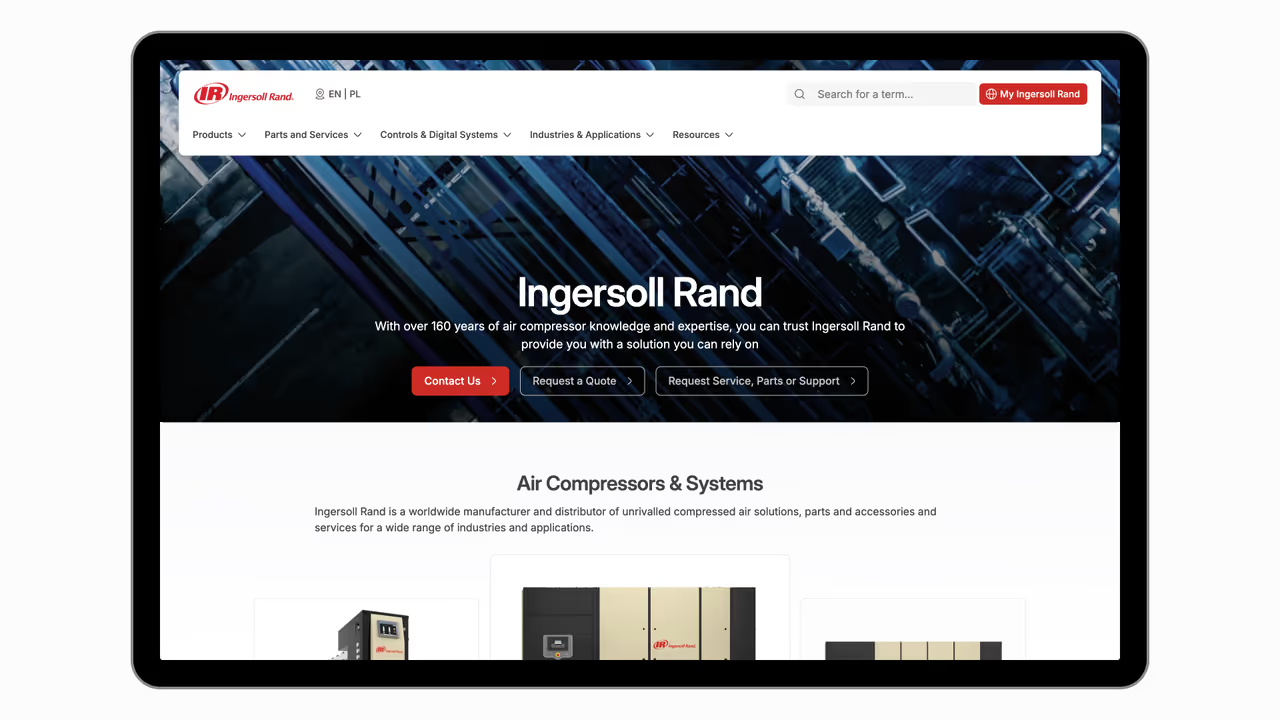
We migrated Ingersoll Rand's China sites off Oracle Content Manager in five months
- 20+
- Brands
- 5
- Months
- 1000s
- Pages
Now booking enterprise content platform builds for 2026. Contact us
Scoped and built by one senior team, and yours to own.










Your marketing and comms team publishes on its own, on a platform built to be found in search and AI answers. Routine content changes stop waiting in the engineering queue.
The old CMS still works, which is why its real cost is easy to miss: the speed, the search visibility, the hours lost to workarounds. We scope what has to carry across — pages, assets, redirects — and handle the move.
Built on open, widely-used technology — actively maintained, proven at scale, with no vendor owning your roadmap. The platform is yours to evolve long after we hand it over.
The content model, the integrations, and the security boundaries are specified in writing before any code, in the same document that fixes the scope.
Both are fixed once the scope is signed off. A pre-launch milestone lets your team test the build against the acceptance criteria, with time to fix anything that misses before launch.
Structured content keeps earning in search and AI as you add to it, and translation opens new markets without rewrites. The platform returns more the longer your team runs it.












Reactive despite being in different timezones (US/EU). Capable to work from a brief and bring new ideas — and quick to bring them to life.
They were instrumental in recovering our product from the abyss and preparing it for launch.
They consistently step in to support us, even with last-minute requests. The collaboration feels seamless and genuinely enjoyable.
Most platforms that claim to be built for LLM retrieval can't back it up. The reason is almost always the content model. Here's what has to be true at the data model level before any AI can retrieve your content cleanly.
Payload ships with access control but no roles. Here's how we built a role-based access control plugin for Payload 3: per-collection and per-field CRUD permissions, multi-tenant scoping, and a tree UI for authoring it all — enforced without rewriting a single collection's access function.
A database-level guide to moving resources between teams in Coolify — connecting to the production Postgres over an SSH tunnel, the team → project → environment relation model, and tested SQL templates for migrating a whole team or a single project, with a full backup and rollback path.
No articles in this category yet.
The first conversation and an initial quote are free, and we put as much useful direction into them as we can. How precise that quote is depends on what you can share up front, since we price from having built most of these platforms before. Once the scope is agreed it is fixed, with a delivery date, and any change after sign-off is a written change to budget or timeline rather than a quiet creep. Modern tooling now handles the repetitive parts of a build, so a fixed price on a short timeline is realistic, and the engineering attention goes to the architecture and integrations where the value actually sits. When a project needs a proper discovery workshop or audit to scope it, that runs as its own paid engagement for the same reason.
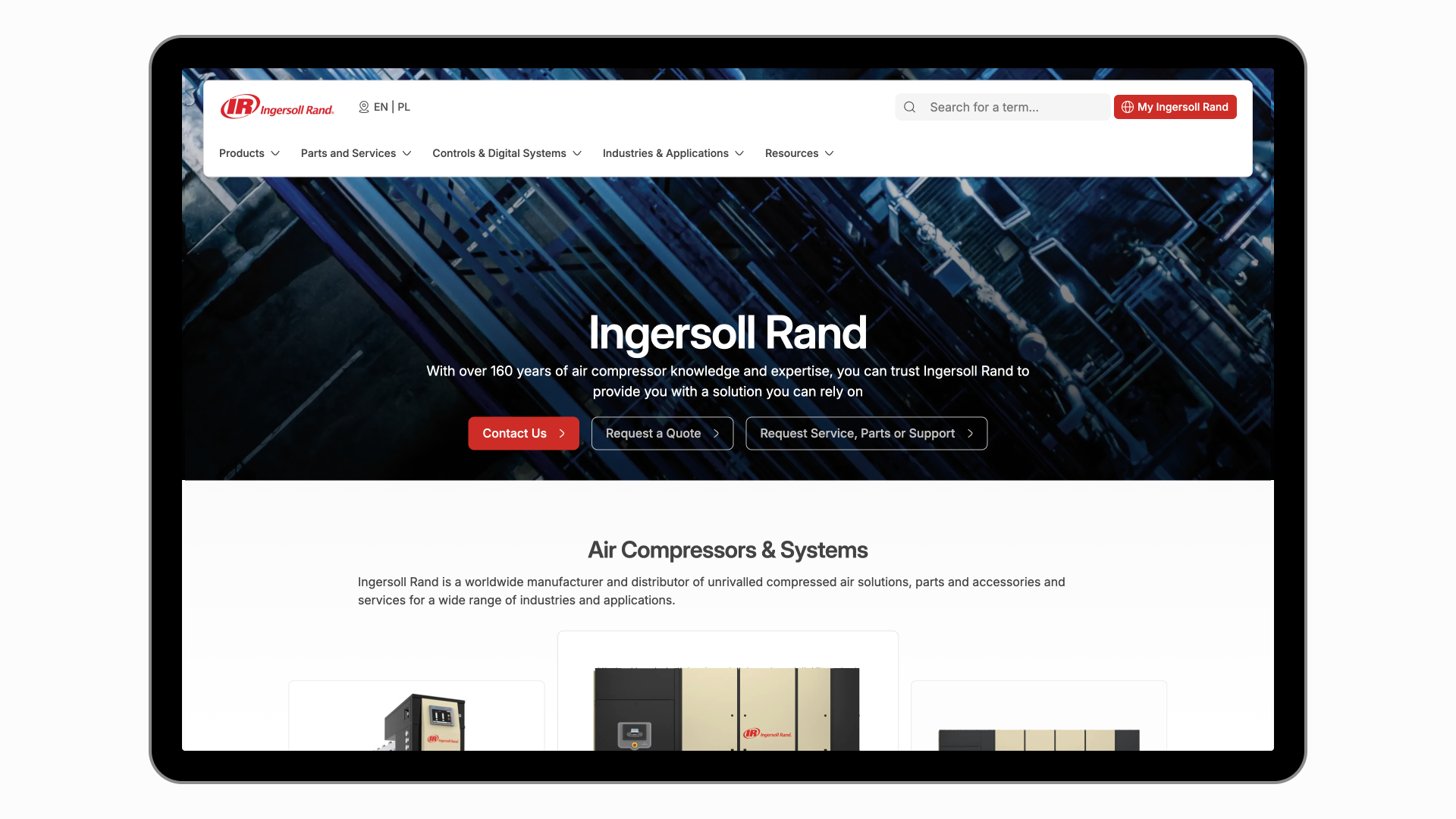
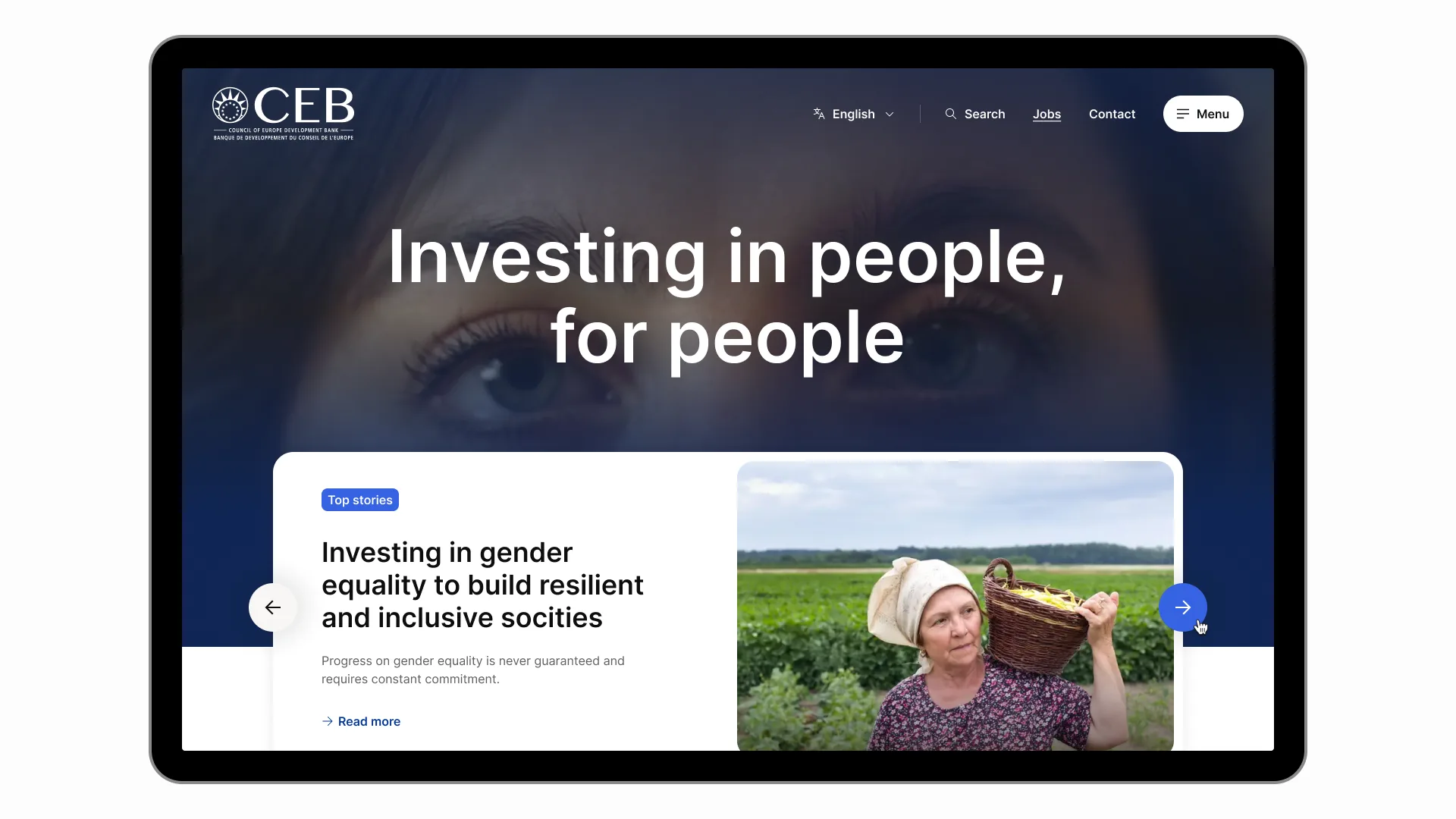
What stays constant across our projects is how we work; the stack is chosen to fit the job. For content platforms we mostly build on Payload, where we hold a top-tier partnership and deep expertise, and where Ingersoll Rand and the Council of Europe Development Bank's events platform both run today. For marketing sites a team needs to author visually, we use Framer. We keep that core narrow on purpose, because building the same kinds of modules many times over is what lets us hold a fixed price. We have also shipped on Contentful, Strapi, and Wagtail, which helps most when we are migrating you off one of them, since we know the ground we are moving you from and will recommend the right target for your team rather than a default.
Most engagements run two to three months end to end, from the first call to handover, with discovery in front. A focused content platform build is one to two weeks of discovery plus four to eight weeks of build once the scope is signed. Enterprise migrations with heavier integration work run closer to three to five months, because discovery carries more decisions about what to migrate and how. We quote a specific delivery date rather than a range, and we set a pre-launch milestone, sometimes more than one on a longer project, where your team exercises the build against the acceptance criteria before the final date, with time to fix anything that misses.
Running the platform without us is part of the acceptance criteria, so the build is not done until your team can operate it. It ships with full handover documentation and source access. We usually recommend a hypercare period right after launch and handover, often around ninety days, where we stay close while your team settles in and production issues get resolved quickly. After that, defects, support requests, and new ideas are handled separately, so support work does not quietly consume the capacity meant for planned scope, and new work starts with discovery and sign-off. Longer-term maintenance is optional; you are not locked in.
Warsaw, Poland, on Central European Time. The team adapts the live cadence per engagement: full overlap with London and Western Europe, a four-hour midday overlap with US Eastern, and morning overlap with the Gulf. For clients on Central or Pacific time across the US and Canada, the working session shifts later in the Warsaw day. Day-to-day work is async (written updates, recorded walkthroughs, shared Slack or Teams channels); a live session per week is the default cadence.
Reactive despite being in different timezones (US/EU). Capable to work from a brief and bring new ideas — and quick to bring them to life.
They were instrumental in recovering our product from the abyss and preparing it for launch.
They consistently step in to support us, even with last-minute requests. The collaboration feels seamless and genuinely enjoyable.
Bring whatever shape the brief is in. We'll talk through the open questions, the trade-offs, and what a sensible first step looks like — whether or not you end up working with us.